


Can a Baby Hear Voices in the Womb?
Pregnancy is filled with many magical milestones, but one question almost every expecting mother asks at some point is: “Can my baby actually hear me while still in the womb?”
The short answer is yes. And the long answer is even more fascinating, because hearing is not just a biological function for the unborn child, it becomes the foundation of their emotional world, memory, bonding, and future learning.
For centuries, Indian wisdom such as Garbh Sanskar has emphasized that the fetus is receptive to sound, thoughts, emotions, vibrations and intentions. Today, modern science finally confirms much of what our texts suggested thousands of years ago: babies do hear in the womb, and the sounds they hear shape their emotional and cognitive development long before birth. Baby hear voices in the womb.
To understand how this works, we need to explore when hearing begins, what exactly the baby can hear, how these sounds influence their development, and how parents can use this knowledge to nurture a healthier, calmer pregnancy experience.
When Does a Baby Start Hearing in the Womb?
Hearing is one of the earliest senses to develop in the fetus. The auditory system begins forming as early as week 6, but it is around week 18–20 that the baby’s ears structurally develop enough to begin receiving sound vibrations. By week 24, the baby can clearly respond to external noise, and by week 28, hearing becomes sophisticated enough for the baby to recognize familiar voices, tones and rhythms.
Even though the womb is cushioned with amniotic fluid, sound waves travel exceptionally well through liquid. Baby hear voices in the womb. This means the baby experiences a world filled with muffled yet meaningful sounds your heartbeat, digestive noises, the rhythm of your breathing, your voice, and external sounds that reach them through the abdominal wall.
Scientific research through fetal heart monitoring, ultrasound observation and post-birth behavioral studies confirms that the fetus not only hears but also responds and remembers what it hears.
Read more about Birth Sanskars
What Sounds Can a Baby Actually Hear Inside the Womb?
Many parents imagine the womb to be a silent space, but in reality, it is a continuous orchestra of natural sounds. The most dominant sound is the mother’s heartbeat, which acts like a calming drumbeat throughout the pregnancy. Babies also hear blood flowing, the rhythmic rise and fall of breath, and the gurgling of the digestive system. Over time, these internal sounds become familiar and comforting.
The mother’s voice passes through both air conduction and bone conduction, making it the clearest and most recognizable sound for the fetus. Babies respond more strongly to their mother’s voice than to any other external sound, because they hear it consistently, rhythmically and closely.
External sounds such as music, talking, prayer chanting or even loud noise also reach the baby. While extremely loud noises can startle the baby, gently spoken words, soft music and rhythmic mantras have shown calming and stabilizing effects on fetal heart rate and movement.
The Connection Between Sound and Fetal Brain Development
Sound exposure plays a critical role in shaping the baby’s brain. When the fetus hears a sound, sound waves cause tiny movements in the inner ear, sending signals to the brain. These signals help create neural pathways essential for memory, learning, language development and emotional processing.
By the third trimester, babies can distinguish between different tones, rhythms and voice patterns. This early learning creates the foundation for linguistic understanding later in life.
Modern neurology demonstrates that babies exposed to stable, repetitive and soothing sounds such as classical music, soft melodies or spiritual chanting show signs of better sleep regulation, calmer temperament and improved cognitive markers after birth.
This aligns closely with the philosophy of Garbh Sanskar, where sounds, chants, and mindful communication are considered tools to foster a healthier, smarter, emotionally balanced child.
How Garbh Sanskar Aligns with Modern Science
Ancient Indian texts have always emphasized that the fetus is conscious and receptive to sound, thought and environment. Practices such as mantra chanting, reading to the unborn child, listening to peaceful music, and maintaining mental calmness have been part of prenatal care for generations.
Modern science now supports many aspects of these practices. The vibrations of mantras, rhythmic chanting and positive communication create consistent auditory stimuli that help regulate fetal heart rate, reduce maternal stress hormones and promote neurodevelopment.
The baby doesn’t understand the words themselves. What they absorb is the sound frequency, emotional tone, rhythm and intention behind the practice. This is why parents who regularly practice Garbh Sanskar often report calmer babies and more mindful pregnancies.
What Happens When You Talk to Your Baby in the Womb?
When parents speak to their baby during pregnancy, the fetus responds in various ways an increase or decrease in movement, a change in heart rate, or a soothing response depending on the sound. Over time, the baby forms emotional associations with the voices they hear most often.
Talking to the baby creates a pattern. The more the baby hears your voice, the more comfort and familiarity they form with it. After birth, this becomes invaluable. Babies are naturally calmer, feed better, and sleep more peacefully when they hear the voices they remember from the womb.
This simple habit of daily communication, talking, reading, or singing to the unborn child creates a strong emotional bond even before the baby enters the world.
How Does the Baby React to Music in the Womb?
Music is one of the strongest forms of prenatal stimulation. Soft, melodic and repetitive music has been found to reduce maternal stress and improve fetal behavioral states. Some types of music especially classical ragas, lullabies or soft instrumental tunes are known to regulate breathing patterns and encourage relaxation.
Harsh, fast-paced or extremely loud music may result in increased fetal movement or restlessness. Therefore, the quality of music matters. Pregnant mothers who invest time in a music routine often find that their babies respond after birth to the same tunes, calming down instantly when those familiar melodies play.
While music cannot make a baby “smarter” by itself, it creates a structured auditory environment that supports healthy brain development and emotional stability.
Do Babies Remember Sounds After Birth?
One of the most intriguing findings in prenatal psychology is that babies retain sound memories from the womb. Voices, rhythms, songs and even daily environmental noises become part of the baby’s early memory bank.
Read how baby hears mantra vibrations in the womb
A newborn can instantly recognize:
- The mother’s voice
- The father’s voice if heard frequently
- Certain types of music
- Repeated sounds such as chants or lullabies
This early recall helps the newborn adjust to the outside world more smoothly. Familiar sounds reduce crying, stabilize sleep patterns and make bonding easier.
Should Parents Use Mantras or Shlokas During Pregnancy?
Many parents wonder if chanting mantras genuinely impacts the baby or is simply a cultural ritual. Mantra chanting produces rhythmic vibrations that travel through the mother’s body and reach the fetus. These vibrations stimulate the baby’s auditory and neural pathways, creating a calming effect.
Mantras are also one of the easiest ways to maintain emotional grounding during pregnancy. Their repetitive nature regulates breathing, reduces stress and brings mental clarity all of which reflect on the baby’s emotional environment.
While any spiritual practice is a personal choice, using chants, prayers or even affirmations is a meaningful way to create a nurturing auditory experience for both mother and child.
Read more about importance of mantras
Garbh Sanskar Puja relevance
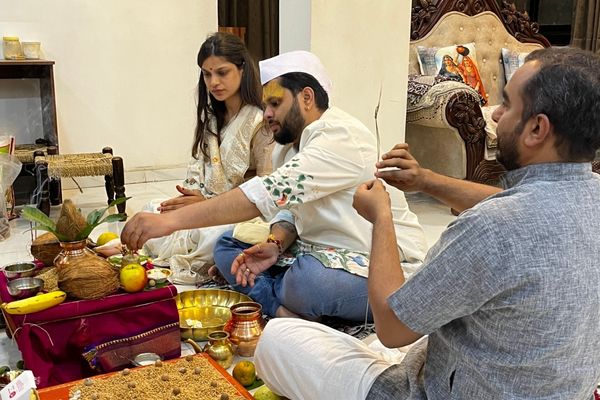
Sound becomes the baby’s first language, and parents are the first teachers even before birth. Every tone, mantra, word and vibration forms the foundation of your child’s emotional and neurological development. This is why many parents today are turning toward Seemantonnayan Garbh Sanskar Puja as a structured and spiritually grounded way to create a positive auditory and emotional environment for the baby.
This ceremony is not just a ritual; it is a scientifically aligned, emotionally rich practice that blesses the mother and sharpens the baby’s sensory and cognitive pathways through mantras, blessings and mindful intentions. By invoking divine vibrations, balancing the mother’s mental state and creating an atmosphere of care, calmness and sacred sound, the Seemantonnayan Garbh Sanskar Puja becomes a powerful tool to support fetal well-being. For expecting parents who want to consciously nurture their baby’s growth, emotional intelligence and inner harmony, this puja offers a holistic path grounded in tradition, science and deep parental love.
Why choose Vandan Pandit?
With Vandan Pandit, you receive:
- Muhurat selected according to the Panchang
- Pure and authentic rituals performed as per Vedic scriptures
- Complete arrangement of all required puja materials
- Clear guidance explaining the meaning and significance of each ritual
Our Strength
- A network of 1500+ trained and certified pandits across Maharashtra
- Complete puja samagri arranged by our team
- A culturally refined, respectful, and stress-free puja experience
📞 Book your puja today: 8104030300
🌐 Serving across Maharashtra | 1500+ Vedic pandits